Retirement Communities in the Bay Area: A 55+ & Active Adult Guide
By Don Orason | Silicon Valley Real Estate Team
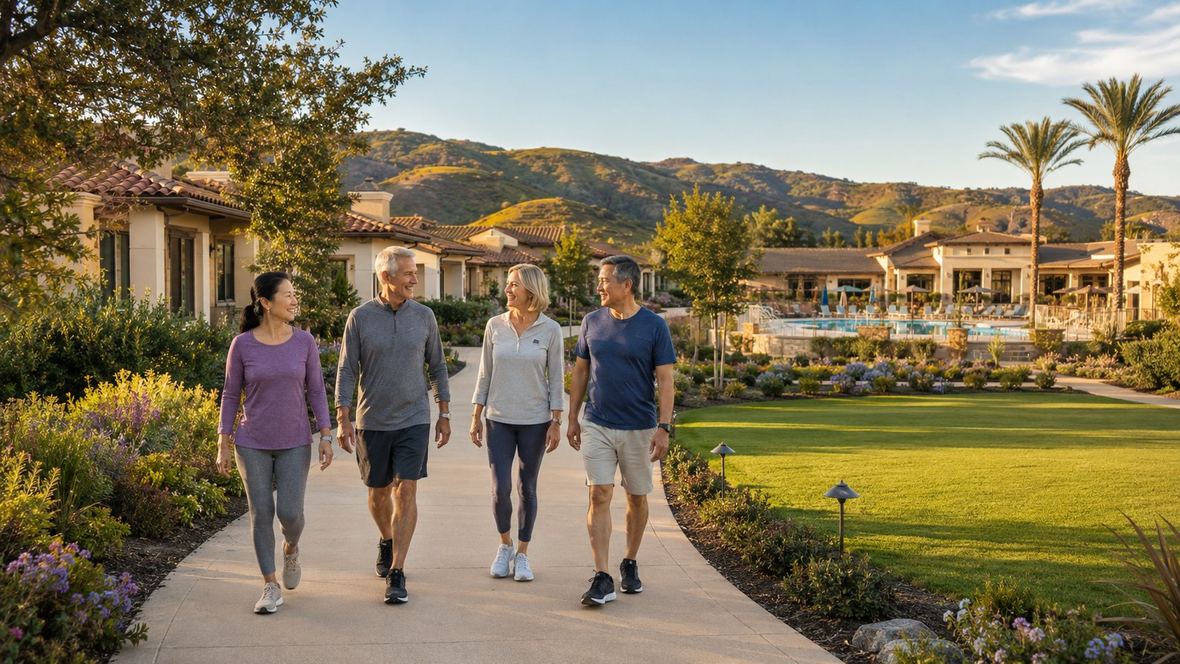
Finding a true retirement community in the Bay Area and Northern California is harder than it looks. Search any national directory for 55+ communities, and you'll get a long list. The real, ownable options are far scarcer than those directories suggest. Look closely, however, and most of those entries turn out to be rental apartments, mobile home parks, or assisted living facilities. This guide does the opposite. Instead of padding the list, it maps only the active adult communities where you actually buy and own a home and where you're age-qualified to live. Don and the Silicon Valley Real Estate Team built it county by county. We also left in the honest gaps, because several counties have no such community at all.
Last Updated: recently
The Bay Area holds a small but genuine set of for-sale retirement communities. These retirement communities in the Bay Area are also called 55+ or active adult communities. The largest retirement community in Silicon Valley and the Bay Area is The Villages Golf and Country Club in San Jose. Meanwhile, Contra Costa County offers the most options, including Rossmoor, Trilogy at The Vineyards, and Summerset. Smaller gated condo communities sit in Los Gatos and Los Altos, while newer single-family communities have opened near Hollister. Several counties, however, currently have none that fit a strict for-sale, age-restricted definition.
The Villages Golf & Country ClubSan Jose, Santa Clara View Homes for Sale → RossmoorWalnut Creek, Contra Costa View Homes for Sale → Del Mesa CarmelCarmel, Monterey View Homes for Sale → Hacienda CarmelCarmel, Monterey View Homes for Sale →
Los Gatos CommonsLos Gatos, Santa Clara See details below
Villa CapriLos Gatos, Santa Clara See details below
Parc RegentLos Altos, Santa Clara See details below
Trilogy at The VineyardsBrentwood, Contra Costa See details below
SummersetBrentwood, Contra Costa See details below
Twin OaksHollister, San Benito See details below
Trilogy at San Juan OaksHollister, San Benito See details below
Pajaro VillageWatsonville, Santa Cruz See details below
Communities with a green border link straight to active listings. The rest are detailed below, by county.
What counts as a true 55+ community?
A true retirement community in the San Francisco Bay Area, in the for-sale sense, is a place where you purchase and own the home, and where at least one resident must meet an age requirement, usually 55. That single definition rules out most listings you'll see elsewhere. After all, rentals, care facilities, and land-lease parks all get filed under the same heading online. Yet none of them is what most buyers actually picture.
The distinction matters more than it seems. Each type carries a different ownership structure, cost, and set of legal rules. Even so, federal law sets the framework here. According to the U.S. Department of Housing and Urban Development, the Housing for Older Persons Act allows communities to restrict residency by age when certain conditions are met. Most Bay Area communities use the 55-and-older standard, which is open to households where at least one resident is 55 or older. A smaller number, by contrast, apply a stricter 62-plus rule. Either way, the restriction is recorded in the homeowners association documents, not left to chance.
So what gets excluded here, and why? We left out three categories on purpose. First, rental apartment communities don't build ownership. Second, manufactured-home and mobile-home parks usually lease the land beneath the house, which changes the entire financial picture. Third, continuing-care and assisted-living campuses provide medical services, which puts them in a different industry altogether. Each is a fine choice for the right person. None, however, belongs on a list of homes you buy.
Pro Tip: Always confirm the age rule and ownership type in the HOA documents before you fall in love with a home, because the listing description is not the binding record.
One more term trips people up. "Active adult" and "age-restricted" sound identical, yet they aren't the same thing. Active adult describes a lifestyle and a set of amenities aimed at people over 55. The age-restricted label, on the other hand, means the rule is legally enforced. Plenty of communities market themselves as active adult without restricting age at all. Online directories blur that line constantly. To avoid the same trap, we checked every entry below against the community's own records rather than a marketing page.
Where are the retirement communities in the Bay Area, county by county?
Genuine retirement communities in the Bay Area cluster in a few specific places across the region. Santa Clara County anchors the Silicon Valley side, while Contra Costa County holds the deepest inventory of 55+ communities. Meanwhile, newer communities throughout Northern California have recently opened toward Hollister in San Benito County. Below, each county lists only the communities that pass a strict test. You buy the home, you own it, and a 55-and-older age rule applies. Where a county has none that qualify, the page says so plainly.
Santa Clara County (Silicon Valley)
The retirement communities in San Jose and the surrounding Santa Clara County towns range from one large resort-style community to a few small gated condo enclaves.
The Villages Golf and Country Club
San Jose, 95135 · ~2,500 condos, townhomes and single-family homes · gated, two golf courses
The Villages is the largest 55+ community in Silicon Valley, and one of the most established in Northern California. It spreads across the rolling foothills of the Evergreen and Silver Creek valleys. As a result, inside the gates residents find two golf courses, swimming pools, tennis, and miles of trails. Additionally, homes range from compact condos to detached single-family residences, so the price ladder is unusually wide for one community. For most Silicon Valley buyers who want to stay close to home, this is the first stop. It also keeps you inside San Jose, with all the city has to offer close by.
Los Gatos Commons
Los Gatos · 110 condominiums, built late 1970s · gated
Los Gatos Commons offers low-maintenance condo living a short distance from downtown Los Gatos and Vasona Lake Park. Notably, the gated community offers one- to three-bedroom floor plans. Residents share a clubhouse, pool, spa, fitness room, and elevator access. As a result, it suits downsizers who want the walkable charm of Los Gatos without having to maintain a yard. Highways 17, 9, and 85 all sit close by, so the rest of the valley stays within easy reach.
Villa Capri
Los Gatos · 35 condominiums, built 1980s · gated
Villa Capri is a small, quiet gated community of just 35 condos. That tiny scale gives it an intimate feel larger developments can't match. Inside, the homes were designed for downsizing, with open one- and two-bedroom layouts in a compact footprint. Additionally, residents share a clubhouse, pool, spa, sauna, and community kitchen. It sits roughly 10 miles from San Jose, close to the conveniences of downtown Los Gatos.
Parc Regent
Los Altos · 57 condominiums, built 1990s · gated, resale only
Meanwhile, Parc Regent brings 55+ condo living to Los Altos real estate, one of the most expensive towns on the Peninsula. The gated community holds 57 resale condominiums near the downtown core. Meanwhile, homes here trade infrequently and command premium prices. That reflects the surrounding Los Altos market, however, rather than the community itself. For a buyer set on staying in Los Altos while shedding a single-family home, the options are few, so this is the one that fits.
Contra Costa County (East Bay)
Contra Costa offers the widest choice of retirement communities in the Bay Area, with the best-known active adult communities in Walnut Creek and Brentwood.
Rossmoor
Walnut Creek · ~6,700 co-ops, condos and single-family homes on 1,800 acres · gated, two golf courses
Rossmoor is the giant among Walnut Creek retirement communities, and of Northern California 55+ living generally. Development began in the 1960s, and the gated community now spreads across 1,800 acres in the Tice Valley area of Walnut Creek. Residents can choose among co-ops, condominiums, and single-family homes, which makes for one of the widest ownership ranges anywhere in the region. The amenities, meanwhile, run deep. Two golf courses, multiple swimming pools, clubhouses, a theater, and well over a hundred social clubs all sit inside. Downtown Walnut Creek, BART, and several hospitals are minutes away.
Trilogy at The Vineyards
Brentwood · single-family homes · gated, resort-style
Built by Shea Homes, Trilogy at The Vineyards delivers resort-style 55+ living in the eastern Contra Costa city of Brentwood. The setting feels rural, with vineyards and the slopes of Mount Diablo nearby. Single-family homes anchor the community. Meanwhile, the amenity package leans toward wellness, social clubs, and outdoor recreation. Consequently, buyers willing to trade a central location for space and value tend to find Brentwood appealing.
Summerset
Brentwood · ~2,000 single-family homes across four neighborhoods · gated, golf
Summerset is actually four connected age-restricted neighborhoods in Brentwood. Developed over roughly a decade, they total around 2,000 single-family homes. The community wraps around the Brentwood golf course and offers single-story layouts built for easy living. Likewise, residents share clubhouses, pools, a fitness center, and a long roster of social clubs. Because the homes are detached, and because the area is more affordable than the inner Bay Area, Summerset draws buyers who want a house rather than a condo.
San Benito County (Hollister, just south of Silicon Valley)
Hollister sits roughly an hour south of San Jose, and it has become the region's hot spot for brand-new 55+ construction. Both communities below are recent builds. That sets them apart from the resale-only profile of most Bay Area options.
Twin Oaks
Hollister · 168 single-story single-family homes · gated, new construction
Twin Oaks is a boutique gated community of single-story homes built for active adults who want something new. Floor plans favor two bedrooms plus a den. Additionally, expect covered outdoor living and smart-home features throughout. At the center sits the Cannery Club, a clubhouse with a fitness room, demonstration kitchen, pool, pickleball, and bocce. Notably, the community markets directly to South Bay and San Jose buyers. Its location near Hazel Hawkins Hospital also keeps healthcare close.
Trilogy at San Juan Oaks
Hollister · ~230 single-family homes (first phase) · gated, golf, new construction
Shea Homes started Trilogy at San Juan Oaks recently, with plans for roughly 230 single-family homes in its first phase. The community wraps around the San Juan Oaks championship golf course. In addition, it adds a clubhouse, indoor pool, pickleball, a dog park, and walking trails. Likewise, single-story plans dominate, and buyers can still choose finishes on many homes. For active adults who want new construction and golf within an hour of San Jose and Monterey Bay, therefore, it's a strong fit.
Santa Cruz County
Pajaro Village
Watsonville · 369 single-family homes · HOA, clubhouse and pool
Pajaro Village is the one established for-sale 55+ community in Santa Cruz County that clears a strict definition. It holds 369 single-family homes in Watsonville, with a homeowners association that handles common-area upkeep and landscaping. In addition, residents share a clubhouse, pool, fitness room, sauna, billiards, and bocce. The setting feels small-town and quiet, yet Watsonville conveniences, Santa Cruz, and San Jose all sit within reach. Importantly, homeowners own the land beneath the house, which separates it from the manufactured-home parks that dominate the area's senior housing.
Monterey County (Central Coast)
Two distinct 55+ communities sit side by side off Carmel Valley Road, about a mile inland from Highway 1, near Carmel. They share a setting, yet they differ in scale, price, and character. Even so, both qualify as genuine age-restricted, for-sale communities. The local MLS groups them under a single search area, so one listings link below returns active homes in both.
Del Mesa Carmel
Carmel · ~289 condominiums · guard-gated
By comparison, Del Mesa Carmel is the more upscale of the two Carmel Valley communities. It is a guard-gated enclave of roughly 289 condominiums set on an elevated plateau, which gives many units sweeping views toward Carmel Valley, Point Lobos, and the Santa Lucia range. On-site amenities include a restaurant, a fitness center, a pool, and a dedicated activities director. As a result, the community tends to draw buyers who want resort-style ease with a coastal view. Carmel's shops, dining, and beaches sit a short drive away.
Hacienda Carmel
Carmel · 300 condominiums on 50 acres · HOA, age 55+
Just down the road from Del Mesa, Hacienda Carmel offers a flatter, more garden-like setting along the Carmel River. It holds 300 individually owned condominiums spread across 50 acres. Floor plans run from studios up to two-bedroom units. At its heart sits Casa Central, a clubhouse with a dining room, library, hobby and music rooms, and a pool. Units are owned fee-simple under federal senior-housing rules, while the association handles utilities and grounds. By contrast with Del Mesa, values here tend to run more affordable, which makes it a common entry point for Peninsula downsizers.
This search returns active listings for both Hacienda Carmel and Del Mesa Carmel, since the MLS groups them under one area.
Counties with no qualifying community right now
Three of the counties we serve currently have no retirement community that meets a strict for-sale, age-restricted standard. It reflects how expensive and built-out the land is, which leaves little room for large age-restricted developments. As a result, buyers in these counties usually look to a neighboring county, or to an all-ages condo that simply happens to suit downsizers.
Alameda County. No dedicated for-sale 55+ community fits the definition today. Instead, local 55+ listings tend to be rentals, care facilities, or manufactured-home parks. Nearby Contra Costa options like Rossmoor therefore draw many East Bay buyers.
San Mateo County. The Peninsula has no qualifying for-sale 55+ community at present. Buyers here often look south to Santa Clara County, or across to the East Bay instead.
Stanislaus County. Modesto-area 55+ housing is almost entirely manufactured-home parks, which fall outside this guide. Buyers seeking owned homes typically look toward neighboring communities.
Pro Tip: If your target county shows nothing here, widen the search by one county rather than dropping the age requirement, because the right community is often a short drive away.
What's the difference between resort-style and smaller condo communities?
Bay Area retirement communities fall into two clear shapes. Knowing which one you want narrows the search fast. Resort-style communities are large, amenity-rich, and built around golf or extensive clubhouses for residents over 55. The smaller condo communities, by contrast, are intimate, low-maintenance, and centered on a single building or cluster. Neither is better. Instead, they simply serve different priorities, and the price and lifestyle follow from that choice.
Resort-style vs. smaller condo communities at a glance
| Feature |
Resort-style |
Smaller condo |
| Size |
Hundreds to thousands of homes |
Dozens to a couple hundred |
| Home type |
Single-family, condos, sometimes co-ops |
Mostly condominiums |
| Amenities |
Golf, multiple pools, clubs, theaters |
Clubhouse, pool, fitness room |
| Examples |
The Villages, Rossmoor, Summerset |
Los Gatos Commons, Villa Capri, Parc Regent |
| Best for |
Buyers who want activities at the doorstep |
Buyers who want a walkable town and less upkeep |
So which one fits you? Think about how you'll actually spend your week. A golfer who wants neighbors, clubs, and a packed events calendar will thrive in a resort-style community. A buyer who values a quiet building near downtown, and who travels often, may instead prefer the lock-and-leave simplicity of a small condo. To compare what's on the market in either format, the SVRET condo search is a good starting point.
How does Proposition 19 help buyers over 55?
Notably, California's Proposition 19 gives homeowners over 55 a meaningful tax advantage when they move. According to the California State Board of Equalization, an eligible homeowner can transfer the taxable value of a current home to a replacement home anywhere in the state. Your property tax does not automatically reset to the new home's full market value. A move into a 55+ community can therefore be far more affordable than it first appears.
The rule replaced the older, more limited Propositions 60 and 90, which only worked in certain participating counties. According to the California Legislative Analyst's Office, Proposition 19 passed statewide and took effect for transfers in 2021. It also allows up to three such transfers over a lifetime, and it removed the old county-by-county restriction. For someone selling a long-held Bay Area home, where the assessed value may sit far below today's market, the savings can be substantial.
Pro Tip: Confirm the timing and filing steps early, because the value transfer must follow specific rules to qualify.
So how does this play out in practice? A couple who bought decades ago might now want to downsize into a condo community. Without the transfer, their tax bill could climb sharply on a newer home. With it, by contrast, they carry much of their low assessed value forward. The numbers vary by situation, so this guide won't quote figures. Still, the principle is simple. The rule exists to help older homeowners move into a retirement community without a tax penalty. Curious what your current home might bring? Try the SVRET home value estimate.
Consult a licensed CPA and tax attorney before making any decisions based on tax implications.
How do you choose a 55+ community, and what should you verify?
Choosing among Bay Area retirement communities comes down to matching the right community to your daily life, and then confirming the fine print before you commit. Location, ownership type, monthly costs, and amenities all carry weight. Nevertheless, they matter only after you've verified the basics. Too many buyers fall for a clubhouse and skip the documents that govern how the place actually runs. A short checklist keeps you grounded.
Verify the age rule and ownership structure
Start with the homeowners association documents. They state whether the community uses a 55-or-older rule or a stricter 62-plus standard, and they confirm whether you own the land or lease it. Confirm both in writing. After all, a listing can describe a place as "senior" without that meaning a legally binding age restriction. The recorded documents are the only source that settles it.
Understand the monthly costs
HOA dues fund the amenities and upkeep that make these retirement communities appealing, and they vary widely. Some include water, trash, and exterior maintenance, while others cover far less. Always ask for the current dues, the reserve study, and any planned special assessments. A low purchase price paired with rising dues can change the math, so look at the full monthly picture rather than the sticker alone.
Match amenities to how you live
Be honest about what you'll really use. Two golf courses sound wonderful, but if you don't golf, you're funding them anyway. A buyer who swims daily values pools differently than one who wants a quiet library and a card room. Therefore, walk the grounds, sit in the clubhouse, and picture an ordinary Tuesday. The amenities you'll actually touch should drive the decision.
In any case, want a second set of eyes on a specific community? Don and the Silicon Valley Real Estate Team can pull current listings, review HOA documents, and walk you through the tradeoffs. New to the area? The relocation services page is a useful starting point, while the buyer's guide and seller's guide cover both sides of a move. You can also read what past clients have said on the client reviews page. Alternatively, run the numbers with the SVRET mortgage calculator.
Frequently asked questions about Bay Area retirement communities
What is the largest 55+ community in Silicon Valley?
The Villages Golf and Country Club in San Jose is the largest of the retirement communities in the Bay Area, with roughly 2,500 condos, townhomes, and single-family homes. It also sits on more than a thousand acres in the Evergreen foothills, with two golf courses, pools, and a wide range of social clubs. Those amenities together make it the dominant active-adult option in Santa Clara County.
What is the difference between a 55+ community and a 62+ community?
A 55+ community requires that at least one resident of each home be 55 or older, while a 62+ community requires every resident to meet the higher age threshold. Both are legal forms of age restriction under the federal Housing for Older Persons Act. However, the 55+ standard is more common across the Bay Area, and the exact rule for any community appears in its recorded homeowners association documents.
Are there 55+ communities in San Jose?
Yes. The Villages Golf and Country Club is the main for-sale 55+ community within San Jose, and it is also the largest in Silicon Valley. It offers condos through single-family homes inside a gated setting with golf and resort-style amenities. Meanwhile, buyers wanting smaller condo options nearby often look to Los Gatos or Los Altos, both a short drive away.
Which Bay Area county has the most 55+ communities?
Contra Costa County holds the deepest inventory of for-sale 55+ communities in the Bay Area. It includes Rossmoor in Walnut Creek, one of the largest active-adult communities in Northern California, along with Trilogy at The Vineyards and Summerset in Brentwood. As a result, the combination of available land and established developments gives the East Bay more options than the inner Peninsula or South Bay.
Are there any new-construction 55+ communities near Silicon Valley?
Yes. The newest for-sale 55+ communities in the region have opened near Hollister in San Benito County, about an hour south of San Jose. Twin Oaks offers single-story single-family homes around a clubhouse, while Trilogy at San Juan Oaks adds golf and new single-family construction. Together, both market directly to South Bay buyers who want a brand-new home rather than a resale.
Do 55+ communities in the Bay Area include single-family homes, or only condos?
Both. Larger communities like The Villages, Rossmoor, and Summerset include single-family homes alongside condos and townhomes. Smaller communities in Los Gatos and Los Altos are mostly condominiums built for downsizing. Therefore, the home type you want is one of the fastest ways to narrow the list, since some communities offer only one format.
Why are there so few 55+ communities on the Peninsula?
Land on the Peninsula is among the most expensive and built-out in the country, which leaves little room for large age-restricted developments. As a result, San Mateo County currently has no qualifying for-sale 55+ community, and Santa Clara County options are concentrated in a handful of places. Instead, buyers seeking the Peninsula lifestyle often consider nearby Santa Clara County communities or smaller condo settings.
Are mobile-home parks considered 55+ communities?
Many 55+ mobile-home and manufactured-home parks exist across the region, but this guide does not include them. In most parks you own the home while leasing the land beneath it, which creates a different ownership and cost structure than buying a home and the land together. For that reason, buyers focused on owning real property usually prefer the communities listed here.
What is the difference between active adult and assisted living?
Active adult communities, sometimes called age restricted communities, are for independent residents over 55 who want a low-maintenance home and lifestyle amenities, with no medical care provided. Assisted living and continuing-care campuses provide personal or medical support, which places them in a different category entirely. This guide covers for-sale retirement communities in the Bay Area that are active-adult only, and does not include care facilities.
Can I keep my low property tax when I move to a 55+ community?
Often, yes. California Proposition 19 lets homeowners who are 55 or older transfer the taxable value of their current home to a replacement home anywhere in the state, subject to timing and filing rules. According to the California State Board of Equalization, this can significantly reduce the property tax on a new home. Consult a licensed CPA and tax attorney before making any decisions based on tax implications.
Do 55+ communities have HOA fees, and what do they cover?
Yes, age-restricted communities carry homeowners association dues that fund amenities and shared upkeep. Coverage varies widely. For instance, some communities include water, trash, exterior maintenance, and amenity access, while others cover far less. Therefore, always request the current dues, the reserve study, and any planned special assessments before you buy, so the full monthly cost is clear.
Are 55+ communities gated?
Most of the Bay Area communities in this guide are gated, which many residents value for privacy and security. The Villages, Rossmoor, Summerset, Twin Oaks, and the Los Gatos and Los Altos condo communities all use controlled access. Gating is common in active-adult communities, and many residents value it for privacy and security. Still, it is not a universal requirement across every age-restricted community. For that reason, confirm the specifics for any community you seriously consider before making an offer.
Can a younger spouse live in a 55+ community?
Usually, yes. Under the common 55-or-older standard, only one resident of the home must meet the age requirement, so a younger spouse can typically live there. Rules on minimum ages for other occupants vary by community and appear in the recorded documents. By contrast, a stricter 62+ community applies the age rule to all residents, so always verify the exact policy before buying.
What is the 80/20 rule in a 55+ community?
The 80/20 rule comes from the federal Housing for Older Persons Act, and the name refers to the law's occupancy split. It requires that the large majority of occupied homes in an age-restricted community have at least one resident who is 55 or older. A small share of units gives communities limited flexibility, although many choose to apply the age rule more strictly. Each community's exact policy appears in its recorded homeowners association documents.
How do I find current listings in a specific 55+ community?
The fastest way is to search the live MLS, since availability in these communities changes constantly and homes can move quickly. Alternatively, you can browse active listings through the SVRET property search, or contact Don and the Silicon Valley Real Estate Team directly for current homes in a named community, along with help reviewing the HOA documents and pricing.

About the Author
Don Orason has worked in Silicon Valley real estate for over 25 years, with focus on Santa Clara County and San Mateo County. He is the founder of the Silicon Valley Real Estate Team (CA DRE #01319840). Learn more on the Don Orason bio page.
Ready to find your community?
Whether you're drawn to a resort-style option or a quiet condo near downtown, your next step among the Bay Area retirement communities is simple. See what's available now, and understand your numbers. Here's where to start.
Listing information is deemed reliable but not guaranteed. Community details, home counts, and availability change over time and should be independently verified. Past market performance does not guarantee future results.